Commercial Waste Removal in Barkingside

Commercial waste removal in Barkingside needs to be straightforward, orderly and suited to the way a business actually works. We handle recurring and one-off collections for offices, shops, hospitality premises, workshops and shared buildings that need reliable clearance of unwanted materials. The aim is simple: remove waste with as little interruption as possible, keep the process clear from the start, and make it easier to manage the space that your team uses every day.
Our service covers a broad range of non-hazardous commercial waste streams, from general rubbish and packaging to redundant fixtures, office contents and mixed items that build up during changes, refurbishments or routine housekeeping. We can also support businesses that need a larger clearance across more than one area of a property, including back rooms, storerooms, receptions, upper floors and plant-adjacent spaces where waste can accumulate quietly over time.
To request a quotation, start with a brief description of what needs clearing and the location on the premises where it is stored. If your waste includes heavier items, awkward access or a mixture of materials, that detail helps shape a sensible plan. You can also use our pricing and quotes page for a closer look at the information needed before work is arranged.
Business waste collections planned around your premises
Commercial collections are often easier to manage when the waste is sorted into practical groups before removal. That may mean separating cardboard from bagged rubbish, keeping reusable office furniture apart from broken fittings, or identifying items that should be handled with extra care. A tidier handover can make loading faster and reduce the chance of missing something important in a busy commercial environment.
We work with premises that generate waste in different patterns. Some businesses need an occasional clearance after a reorganisation, while others prefer a more regular approach to prevent overflow. In either case, the service can be shaped around the type of material, how much space it occupies and the access available on the day. If you are planning a more structured arrangement, our business waste removal page explains the main service in more detail.
Useful preparations can be simple. Keep walkways clear, group similar items together where possible, and make sure someone responsible for the site can confirm what should go and what should stay. If there are shared entrances, lifts, loading bays or timing restrictions, mention them early so the collection can be arranged with the setting in mind rather than forcing the job into a fixed pattern.
Office clearances for furniture, equipment and general contents

Offices usually produce a mixture of waste rather than a single material stream. Old desks, chairs, filing units, boxed paperwork, packaging and broken equipment can all sit alongside everyday rubbish. Our office clearance service is designed for that kind of varied load, whether the work involves a single room, a suite of rooms or a larger suite that is being reconfigured. The objective is to remove what is no longer needed without disturbing the rest of the premises more than necessary.
For many office jobs, the main decision is whether items are being removed from an active workspace or from an area that has already been vacated. That affects how the clearance is planned and how carefully each item needs to be moved through the building. Where relevant, we can also discuss how bulky or awkward furniture should be handled and whether anything needs to be dismantled before it leaves the property. For a focused description of this work, see our office clearance page.
When preparing an enquiry, it helps to note any shared corridors, stairs, lifts or restricted loading points that may affect access. Photos or a short inventory are often useful if the contents are spread across several rooms or include mixed items of different sizes. If you already know which pieces are staying in place, that separation keeps the quote process cleaner and reduces the chance of unnecessary removal.
Furniture and bulky item disposal for commercial spaces
Businesses often need removal of items that are too large to leave through normal waste channels, even when they are no longer usable. This can include reception seating, desks, shelving, storage cupboards, tables, filing units and other bulky fixtures that have reached the end of their working life. Our furniture disposal service is a practical option when the aim is to clear space efficiently while keeping the site tidy and manageable.
Some items may still be in serviceable condition, while others may be damaged, heavily worn or simply no longer suited to the layout of the building. The disposal approach can vary depending on the material, construction and how much handling is required to move it safely. If you are dealing with a larger quantity of furniture across several rooms, the furniture clearance page gives a broader view of how grouped items can be removed together.
In many commercial settings, the best results come from clear separation between reusable items, general waste and anything that needs extra handling. That helps the collection stay organised and keeps the work moving in the right order. If you are unsure whether a particular item should be listed separately, simply describe it in plain language rather than trying to make technical judgments yourself.
About Barkingside
Barkingside is a district in the London Borough of Redbridge, in east London, with a character shaped by suburban growth, transport links and long-standing local institutions. The area is closely associated with Central line rail services, and Barkingside station provides a familiar reference point for the district’s high street and surrounding streets. The built environment reflects different phases of development, from older village traces to later twentieth-century housing and retail frontage, giving the place a mixed but recognisable streetscape. Local landmarks include Fairlop Waters Country Park to the east of the wider area, which offers open space, walking routes and water-based recreation, while Valentines Park and other green spaces lie within reach of the district’s broader setting. The area also has cultural associations through its connection with the Jewish community and with charitable and social institutions that have played a notable role in the surrounding part of Redbridge. Barkingside’s name is often used more narrowly for the immediate shopping and station district, but it also relates to the wider residential neighbourhoods nearby, where ordinary suburban streets, schools and places of worship shape everyday life. The result is a part of London that combines local convenience with access to larger borough amenities, and where the street pattern still hints at the transition from older rural fringes to an established urban suburb.
Clearance for shops, storage areas and mixed-use premises
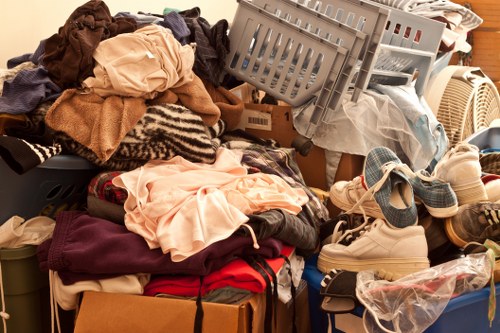
Retail and mixed-use premises often produce waste in several forms at once. Packaging, broken fixtures, unwanted display units, back-of-house rubbish and obsolete stock can all need moving at the same time, especially after a refit, a change of tenant or a stockroom reorganisation. Our commercial waste removal service is suited to those layered clearances because it allows different items to be dealt with in one planned visit rather than piecemeal over several days.
Where the work involves a shop floor or customer-facing area, the order of removal matters. Heavy items are usually best taken out after lighter loose materials have been cleared, and routes through the property should be chosen carefully so that the remaining premises stay usable for as long as possible. If the site includes storage at the rear, a basement or an upper level, that should be noted early so the clearance can be approached sensibly. A short overview is available on our waste removal page.
One clear advantage of a planned clearance is that it can reduce disruption during busy periods or refurbishment work. Instead of scattering removal across several separate arrangements, the waste can be grouped, assessed and taken away in a coordinated way. That is especially useful where the site manager wants a tidier handover at the end of the job and prefers a single point of responsibility for the removal itself.
Garage, storage and back-room waste from business premises
Back rooms, garages and ad hoc storage spaces often become holding points for items that are no longer required but have not yet been sorted. In commercial settings this may include broken tools, packaging, redundant furnishings, old shelving or general clutter that has built up over time. Our garage clearance service can also be useful for business premises with ancillary spaces that are not part of the main customer area but still need regular attention.
These clearances are often at their best when the contents are described in simple categories rather than as a single mixed pile. Some items may be heavy, some may be stacked, and some may be stored in awkward corners that take more handling than expected. If the space is being emptied as part of a wider property clean-up, the home clearance and house clearance pages show related clearance options for properties that need a more comprehensive removal. The same careful approach to sorting still applies when the setting is commercial rather than domestic.
For this type of work, it is sensible to identify any items that should remain on site before the removal begins. That may include archived records, tools in use, or equipment waiting for repair. A quick check before the team starts can prevent uncertainty later and keep the work focused on the items that are definitely leaving. If there are multiple back-room spaces, list them in order so the clearance can be planned efficiently.
Heavier items, appliances and specialist disposal needs
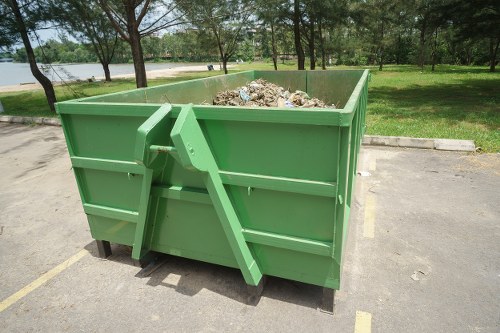
Some commercial clearances involve items that are not simply bulky but also awkward to move, such as fridges, appliances and certain fixed units. These jobs benefit from a measured approach because the handling requirements can differ from ordinary bagged waste or loose rubbish. Our fridge and appliance removal service is useful where premises need to dispose of equipment that has reached the end of its useful life and should be taken away as part of a wider clearance plan.
If your business also has items that fall outside normal mixed rubbish, such as mattresses, sofas or similar large soft furnishings from staff areas or customer spaces, those can usually be described separately so the right collection approach is used. See our mattress and sofa disposal page for a more specific explanation of that type of removal. Where waste needs additional attention because of its nature, the key is to identify it early and avoid bundling it into a vague description.
What helps a quotation stay accurate
A good quotation starts with a clear description of the job rather than a long explanation. Tell us what needs removing, roughly how much there is, where it is stored and whether the site has anything that could affect access or loading. If the waste is spread over several rooms, it helps to mention that too, because the route through the property can be just as important as the items themselves.
When businesses ask for pricing, the main variables are usually volume, weight, item type and access. A clearance from a ground-floor storeroom is generally different from one involving upper floors, narrow staircases or shared entrances. If there are time windows to work within, such as before opening or after closing, that can also shape the plan. You can review the pricing and quotes page if you want to understand the information that is typically useful before a job is arranged.
For larger or more detailed clearances, a short list or a few photographs can save time and reduce back-and-forth. That is especially helpful when the contents are mixed or when several categories of waste are present in the same area. The aim is not to overcomplicate the request, but to give enough detail for an informed, practical quotation that reflects the actual work required.
Organised removals for regular and one-off commercial needs

Some businesses need clearance only when a specific task arises, such as an office reconfiguration or the end of a tenancy. Others prefer to keep on top of waste more steadily, especially where packaging, redundant fittings or back-room clutter would otherwise build up over time. Our commercial waste removal service can support either pattern, with the emphasis placed on keeping the work manageable and the premises usable.
If your site also needs support with internal organisation after items have been removed, related services such as loft clearance, furniture clearance and flat clearance may be useful in broader property settings. For commercial premises, though, the important point is that the waste is assessed properly before removal begins, so the collection method matches the actual contents rather than forcing everything into one generic category. That gives a more orderly result and makes it easier to maintain a sensible workspace.
To finish, send a short description of the job and the site details so the right plan can be prepared. If you are ready to move ahead, please request a quotation using the contact route that suits you best, and we will take it from there.